An Industrial Town
Laurence Stephen Lowry, R.A. (1887-1976)
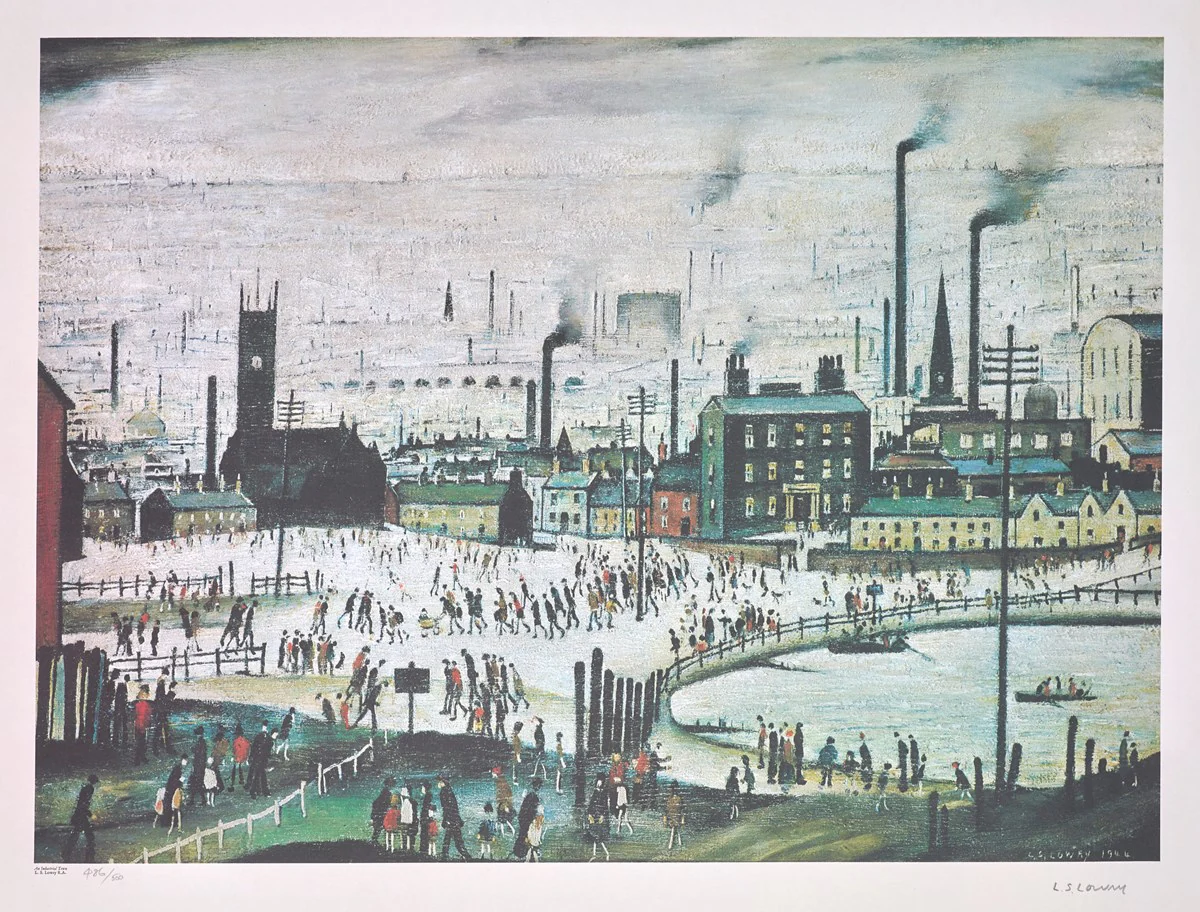
An Industrial Town, 1974
Offset lithograph on wove paper, after the original oil painting from 1944 of the same title (Collection: Birmingham Museums Trust, U.K.).
Signed ‘L.S. Lowry’ lower right and numbered from the edition of 500 lower left in pencil
Published by Peinture Ltd.
Size: 18 x 24 in. (46.5 x 61.5 cm.)
(Please enquire for availability)
An Industrial Town is one of the finest examples of Lowry’s industrial landscapes, a theme that provided a constant, binding thread throughout his life and career: “My ambition,” Lowry said, “was to put the industrial scene on the map, because nobody had done it, nobody had done it seriously.” Lowry’s engagement with industry and the urban landscape is what makes his practice unique, a focus that the great critic Herbert Read found “quite extraordinary… [that]… in an industrial country like this, no-one…no painter of any significance has ever taken the industrial landscape as a subject, and what you might call industrial art doesn’t exist.” For Read and many other critics, this fixation is precisely what makes Lowry’s body of work so original.
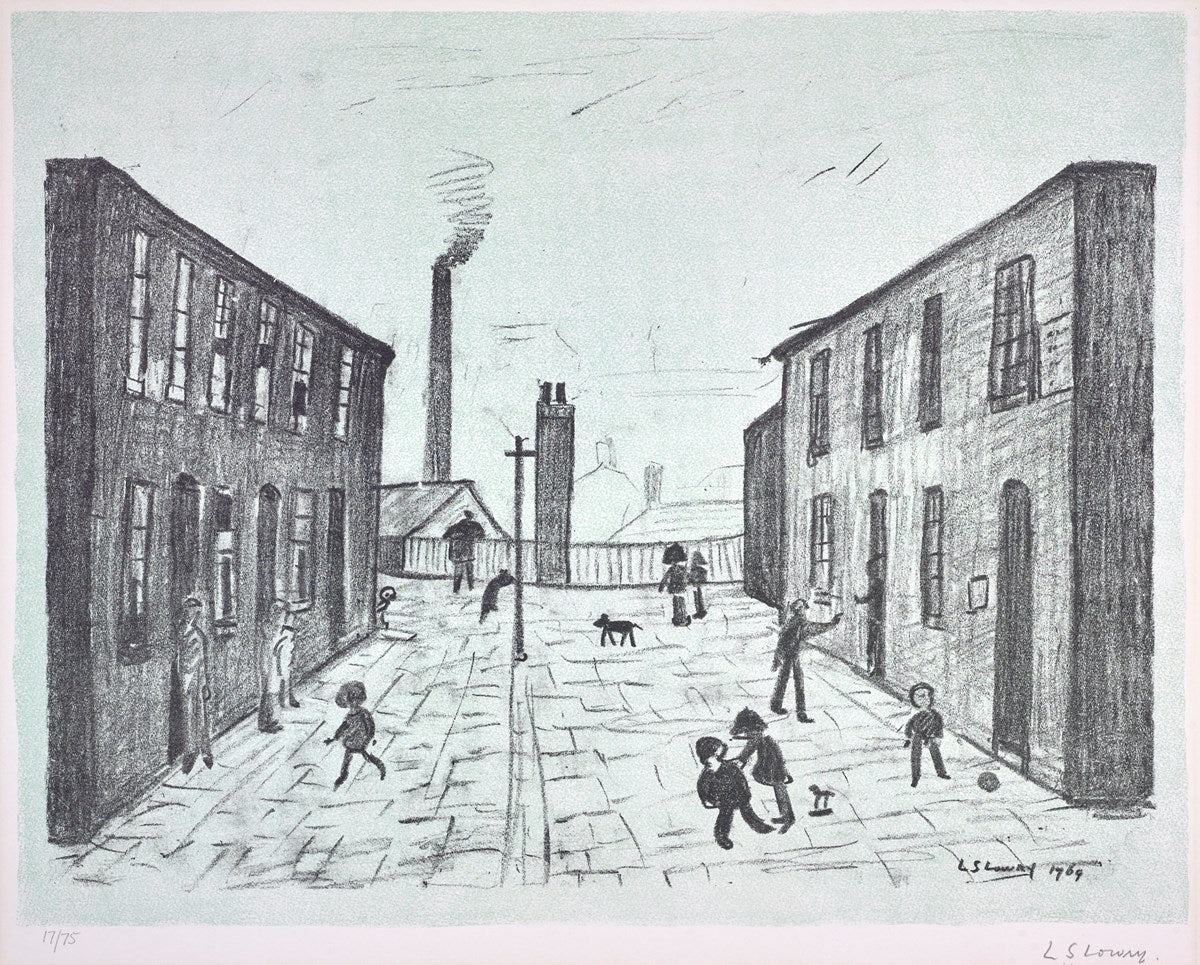
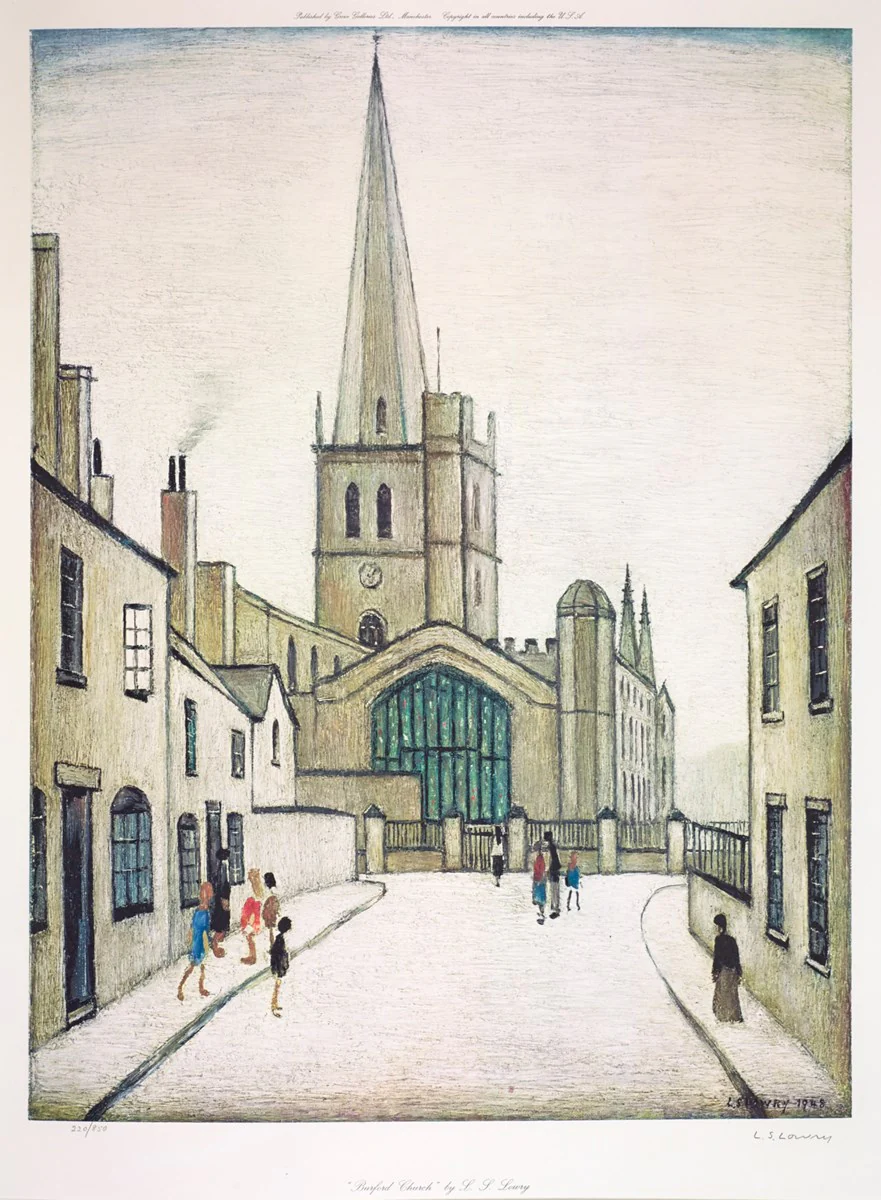
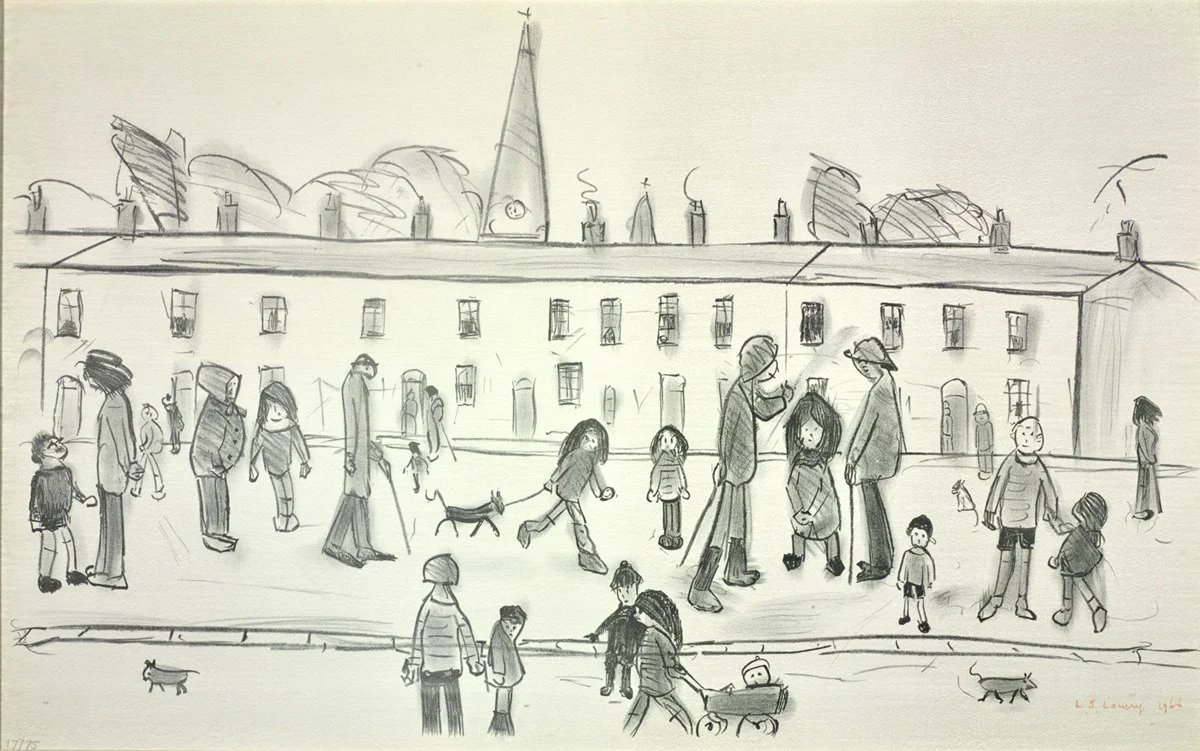
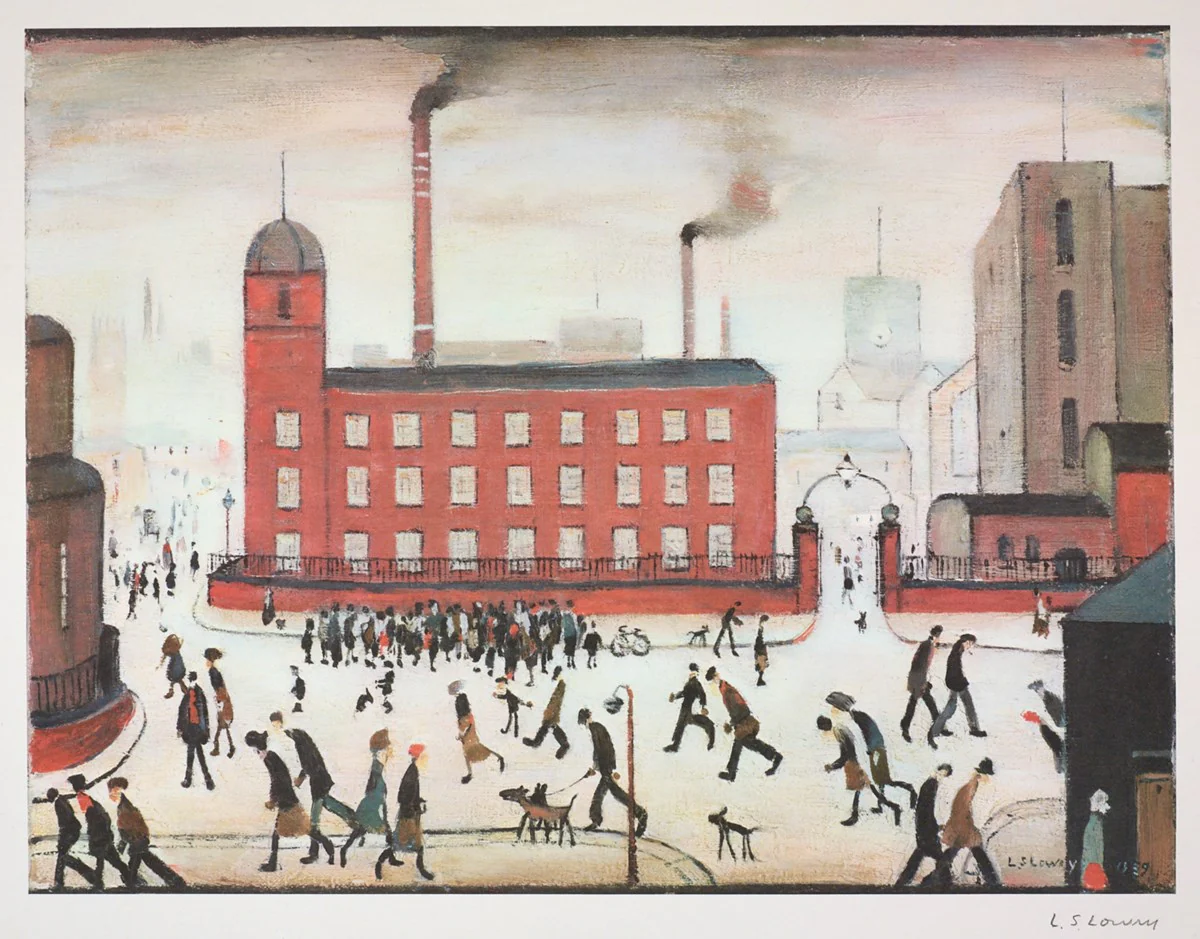
In the present work, an offset lithograph produced from the original panoramic cityscape painting of 1944, the darkened urban environment has become a metaphor for the tough, constrained lives of their inhabitants. A drudging relentlessness can be felt through the smoke that pours from the chimneys, day, and night. Actual sites can be found within the work such as the black church which is most likely St Thomas’ in Manchester’s (see fig. 1). Although the town depicted in this scene does not exist in real life as it is shown, and is an imaginary composition, the anonymity of the figures and the generic feel of the Northern English mill town allows the work to represent anyone working and living in towns like this during the time. It is because of this familiarity that so many people are drawn to the works of Lowry, and his industrial landscapes are so celebrated today by the public and critics alike.
Despite the ostensible bleakness of Industrial Landscape, Lowry had in fact grown to love the urban surroundings that provided such an inspiration to him: “When I was young” Lowry remarked “I did not see the beauty of the Manchester streets. I used to go into the countryside painting landscapes and the like. And then one day I saw it. I was with a man in the city and he said, ‘Look, it is there’. Suddenly I saw the beauty of the streets and the crowds”.
Original: $17,465.39
-65%$17,465.39
$6,112.89An Industrial Town
Laurence Stephen Lowry, R.A. (1887-1976)
An Industrial Town, 1974
Offset lithograph on wove paper, after the original oil painting from 1944 of the same title (Collection: Birmingham Museums Trust, U.K.).
Signed ‘L.S. Lowry’ lower right and numbered from the edition of 500 lower left in pencil
Published by Peinture Ltd.
Size: 18 x 24 in. (46.5 x 61.5 cm.)
(Please enquire for availability)
An Industrial Town is one of the finest examples of Lowry’s industrial landscapes, a theme that provided a constant, binding thread throughout his life and career: “My ambition,” Lowry said, “was to put the industrial scene on the map, because nobody had done it, nobody had done it seriously.” Lowry’s engagement with industry and the urban landscape is what makes his practice unique, a focus that the great critic Herbert Read found “quite extraordinary… [that]… in an industrial country like this, no-one…no painter of any significance has ever taken the industrial landscape as a subject, and what you might call industrial art doesn’t exist.” For Read and many other critics, this fixation is precisely what makes Lowry’s body of work so original.
In the present work, an offset lithograph produced from the original panoramic cityscape painting of 1944, the darkened urban environment has become a metaphor for the tough, constrained lives of their inhabitants. A drudging relentlessness can be felt through the smoke that pours from the chimneys, day, and night. Actual sites can be found within the work such as the black church which is most likely St Thomas’ in Manchester’s (see fig. 1). Although the town depicted in this scene does not exist in real life as it is shown, and is an imaginary composition, the anonymity of the figures and the generic feel of the Northern English mill town allows the work to represent anyone working and living in towns like this during the time. It is because of this familiarity that so many people are drawn to the works of Lowry, and his industrial landscapes are so celebrated today by the public and critics alike.
Despite the ostensible bleakness of Industrial Landscape, Lowry had in fact grown to love the urban surroundings that provided such an inspiration to him: “When I was young” Lowry remarked “I did not see the beauty of the Manchester streets. I used to go into the countryside painting landscapes and the like. And then one day I saw it. I was with a man in the city and he said, ‘Look, it is there’. Suddenly I saw the beauty of the streets and the crowds”.
Product Information
Product Information
Shipping & Returns
Shipping & Returns
Description
Laurence Stephen Lowry, R.A. (1887-1976)
An Industrial Town, 1974
Offset lithograph on wove paper, after the original oil painting from 1944 of the same title (Collection: Birmingham Museums Trust, U.K.).
Signed ‘L.S. Lowry’ lower right and numbered from the edition of 500 lower left in pencil
Published by Peinture Ltd.
Size: 18 x 24 in. (46.5 x 61.5 cm.)
(Please enquire for availability)
An Industrial Town is one of the finest examples of Lowry’s industrial landscapes, a theme that provided a constant, binding thread throughout his life and career: “My ambition,” Lowry said, “was to put the industrial scene on the map, because nobody had done it, nobody had done it seriously.” Lowry’s engagement with industry and the urban landscape is what makes his practice unique, a focus that the great critic Herbert Read found “quite extraordinary… [that]… in an industrial country like this, no-one…no painter of any significance has ever taken the industrial landscape as a subject, and what you might call industrial art doesn’t exist.” For Read and many other critics, this fixation is precisely what makes Lowry’s body of work so original.
In the present work, an offset lithograph produced from the original panoramic cityscape painting of 1944, the darkened urban environment has become a metaphor for the tough, constrained lives of their inhabitants. A drudging relentlessness can be felt through the smoke that pours from the chimneys, day, and night. Actual sites can be found within the work such as the black church which is most likely St Thomas’ in Manchester’s (see fig. 1). Although the town depicted in this scene does not exist in real life as it is shown, and is an imaginary composition, the anonymity of the figures and the generic feel of the Northern English mill town allows the work to represent anyone working and living in towns like this during the time. It is because of this familiarity that so many people are drawn to the works of Lowry, and his industrial landscapes are so celebrated today by the public and critics alike.
Despite the ostensible bleakness of Industrial Landscape, Lowry had in fact grown to love the urban surroundings that provided such an inspiration to him: “When I was young” Lowry remarked “I did not see the beauty of the Manchester streets. I used to go into the countryside painting landscapes and the like. And then one day I saw it. I was with a man in the city and he said, ‘Look, it is there’. Suddenly I saw the beauty of the streets and the crowds”.